
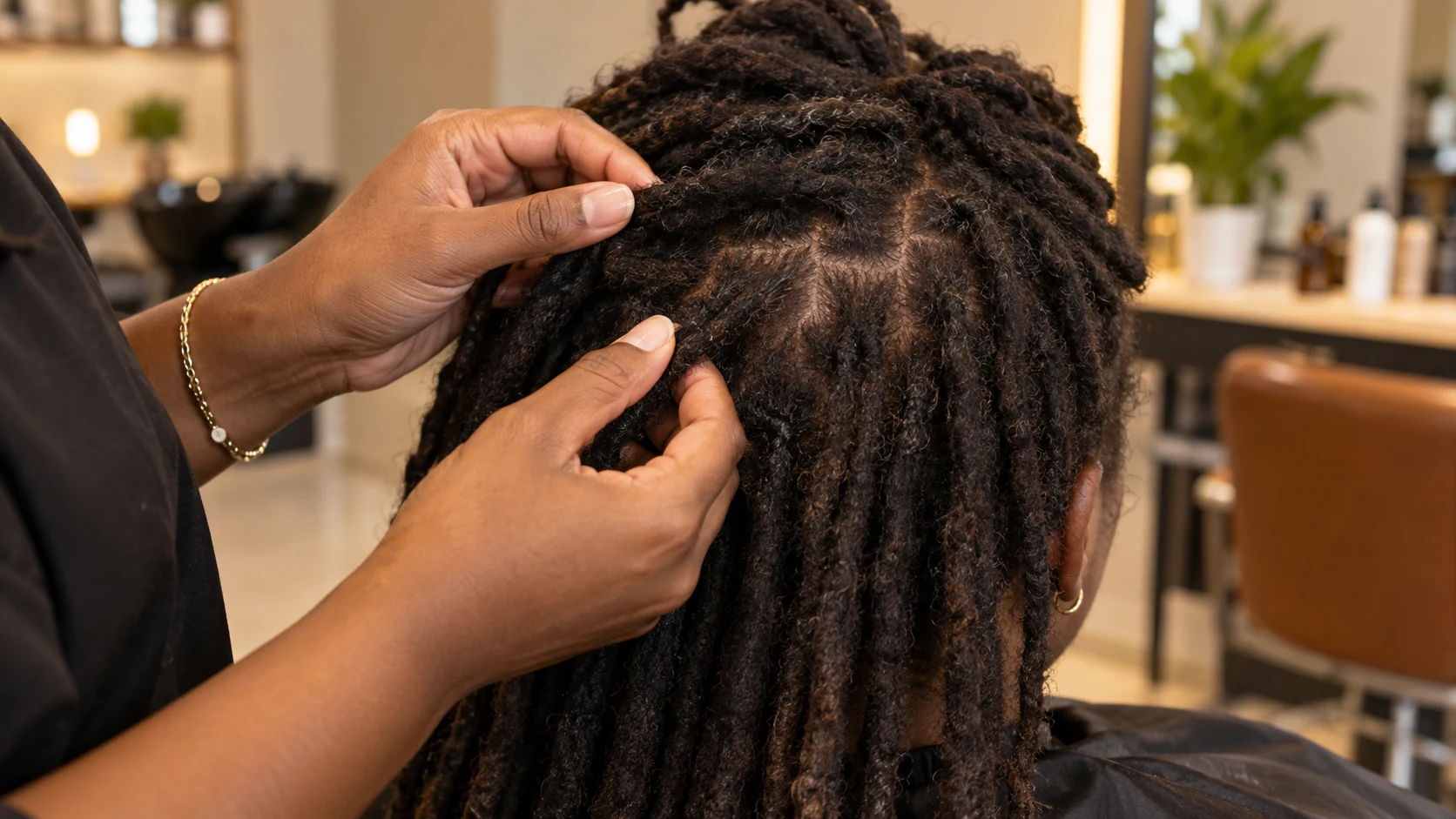
A loc that looks narrow near the scalp needs attention, but it does not automatically mean the follicle is dying. The weak-looking area may come from breakage at the base, an uneven part, repeated retwisting, the weight of a long loc, thinning hair density, or a combination of those factors. The right response depends on which change is actually happening.
Start by comparing the root with older photos and nearby locs. Notice whether one loc is affected or whether a whole region looks less dense. Also look for pain, bumps, redness, scale, smooth skin, or a widening area between parts. These details help separate a maintenance issue from a scalp or hair-loss concern.
A Thin Loc Root Is Not Always the Same as Hair Loss
Sometimes the loc itself has narrowed because strands broke near the base or were repeatedly separated from that loc during maintenance. The scalp may still show normal follicular density. In other cases, fewer hairs are growing in the section, so the base cannot support the same loc size it once did.
A loctician can assess the construction, parting, and physical condition of the loc. Progressive thinning from the scalp, especially across several sections, deserves a broader evaluation. Repairing the loc fiber without understanding declining density can hide the problem temporarily while the underlying change continues.
Why Locs Can Become Thin at the Roots
Frequent tight retwisting can keep the root under repeated tension. Styling locs into tight ponytails, barrels, updos, or gathered looks adds another pulling force, particularly around the hairline and wherever the style is anchored. Pain, stinging, crusting, or a scalp that appears lifted or tented means the style is too tight.
Length and added weight also matter. As locs mature, their weight increases. A very long or decorated loc places more demand on the small section supporting it. Combining, extensions, cuffs, beads, or other accessories can add weight that a fine or thinning base cannot comfortably carry.
Breakage may also follow dryness, rough handling, repeated coloring, overlapping bleach, aggressive crochet work, or cutting stray hairs too close to the base. Beyond styling, patchy or progressive loss can come from traction alopecia, central centrifugal cicatricial alopecia, alopecia areata, pattern hair loss, inflammation, or another condition that cannot be identified from the loc alone.
Warning Signs That Need More Than a Retwist
A single weak root after an obvious maintenance problem is different from several widening parts, smooth patches, recession at the temples, or thinning that continues between appointments. Persistent tenderness, burning, pustules, heavy scale, or sores also points beyond an ordinary loc repair.
Photograph the area in consistent lighting before maintenance. Retwisting can temporarily make parts look sharper and the scalp more visible, so compare the same location when the hair is clean and unstyled. If the change is expanding or new locs are becoming affected, do not keep tightening the roots to make them look fuller.
What to Do When You First Notice a Weak Root
Release tight styling and avoid adding weight to the affected loc. Let the area rest instead of immediately retwisting it. Keep cleansing gentle and thorough, and do not coat the weak point with heavy wax or layers of oil in an attempt to hold it together.
Ask an experienced loc professional to evaluate whether the loc can be supported, combined, reconstructed, or shortened without increasing tension. A repair should distribute weight and preserve viable hair. It should not depend on pulling a very small root tighter or attaching more material than the section can hold.
Can a Thinning Loc Root Be Repaired?
A structurally weak loc may sometimes be reinforced or combined when enough healthy hair remains at the base. The method depends on the loc size, maturity, root density, and location. Repair changes the physical structure of the loc; it does not create new follicles or treat a progressive hair-loss condition.
Sometimes shortening a heavy loc is the safer choice. In other situations, allowing the weak loc to release may protect the surrounding hairs better than repeated reconstruction. A good repair plan values the scalp and root over preserving every inch of the loc at any cost.
Adjust Maintenance Without Neglecting the Scalp
There is no universal retwist interval for every person. Hair growth rate, loc method, activity, scalp condition, and styling habits differ. The important point is to avoid manipulating the same root before it has recovered from the prior service and to avoid using tightness as the measure of a neat result.
Clean the scalp according to its needs and dry the locs thoroughly. Persistent moisture inside dense locs can contribute to odor and microbial problems, while avoiding washing for long periods can allow residue to accumulate. If buildup is already present, use an appropriate cleansing plan rather than scraping or picking aggressively at the scalp.
How Locs Relate to Traction Alopecia
Locs are not automatically damaging. Risk rises when roots experience repeated or prolonged pulling from tight maintenance, heavy length, extensions, or high-tension styles. Traction alopecia may begin with tenderness, bumps, broken hairs, or gradual recession and can become permanent when pulling continues long enough to scar follicles.
Read the refreshed guide to traction alopecia for the broader pattern, prevention steps, and realistic factors affecting regrowth. If the thinning is centered at the crown rather than the points under the most tension, review the early signs of CCCA in Black women as well.
Who Should Evaluate Thinning Loc Roots?
A loctician is appropriate for loc construction, maintenance, weight, and repair. A trichologist can document the pattern, review styling history, inspect the scalp closely, and help identify when referral is needed. A dermatologist diagnoses hair and scalp disease, can order medical testing, prescribe medication, and perform a biopsy when appropriate.
Seek a dermatologist promptly when thinning is spreading, the scalp is smooth or scar-like, there is significant pain or inflammation, or the cause is unclear. Early assessment matters because several different conditions can look similar through parted locs, but their next steps are not the same.
Protect Loc Roots for the Long Term
Choose comfortable maintenance, vary how locs are styled, and avoid repeatedly anchoring weight in the same places. Keep accessories light, reduce unnecessary length when roots are struggling, and speak up during an appointment if a style hurts. A finished style should not require several painful days to loosen.
Take periodic photos of the hairline, crown, sides, and back. Consistent images reveal gradual change more reliably than memory. If density is stable, a loc-care adjustment may be enough. If it is changing, begin with Hair and Scalp Analysis so the next step is based on the pattern rather than a guess.
Not sure whether it is the loc or the root?
Document the pattern, reduce tension, and get the scalp and density reviewed before adding more weight or repeated repairs.
Request Hair & Scalp AnalysisFrequently Asked Questions
Possible reasons include repeated tight retwisting, heavy or very long locs, tight loc styles, breakage, uneven maintenance, or declining hair density. The pattern and scalp symptoms help determine which factor is most likely.
A loc professional may be able to reinforce, combine, reconstruct, or shorten a loc when enough healthy hair remains. Repairing the loc does not treat a hair-loss condition or create new follicles.
Usually, more frequent or tighter retwisting adds manipulation to an already weak base. Release tension and have the root assessed before repeating maintenance.
Seek medical evaluation when thinning spreads, parts continue widening, the scalp looks smooth or scar-like, or you have persistent pain, burning, bumps, scale, sores, or unexplained shedding.