
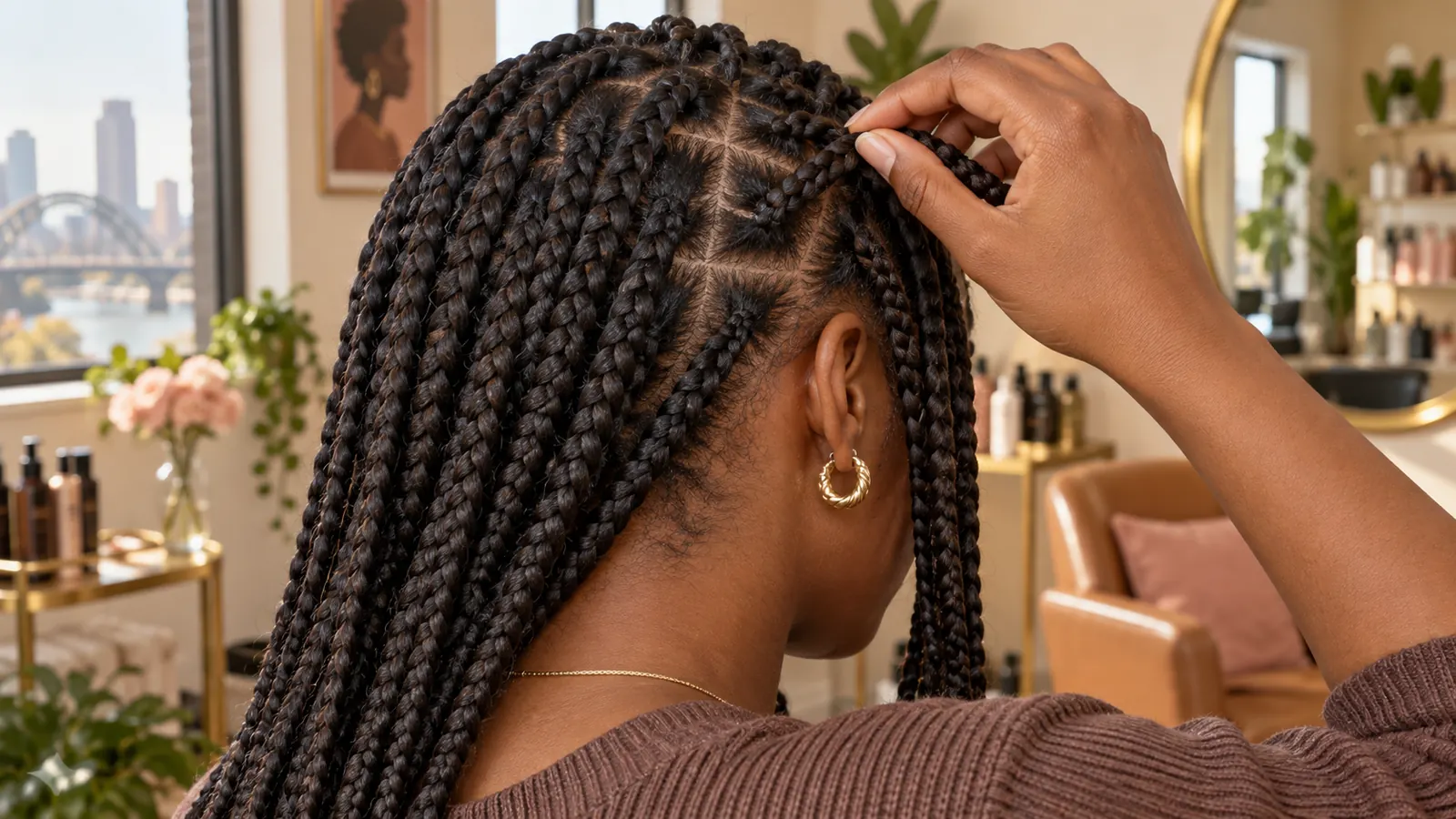
You leave the salon with a new set of braids, then the itching begins. Is it a normal response to a fresh style, a product reaction, or a sign that the braids are too tight? The timing matters, but itching alone cannot tell you the cause.
Start with the sensation and its location. A scalp that feels pulled, sore, or stings at the roots needs a different response from a scalp that developed a widespread itchy rash after a new gel or added hair. New bumps, drainage, or patchy hair loss need another level of attention. This guide helps you decide what to look at first and when to seek medical care.
If the Braids Hurt, Do Not Wait for Them to Loosen
Pressure can be strongest at the edges, nape, and along the part lines. Look for soreness when you move a braid, a headache that began with the style, small raised areas where hair is pulled, or skin that appears lifted at a tight attachment point. Pain and stinging are warning signs, not proof that the braider did a good job.
Ask the stylist to loosen the affected sections promptly. If the style still hurts, have those braids removed. Avoid pulling them into a high bun or ponytail while you wait. Repeated tension can damage hair around the hairline and eventually contribute to traction alopecia. The American Academy of Dermatology advises changing a style that causes pain, stinging, crusts, or visible pulling on the scalp.
Do not try to make a painful installation tolerable by coating the roots with oil. Oil cannot remove the tension. A style can be beautiful and still need an adjustment.
When a Product or Added Hair May Be the Trigger
Think back to what touched your scalp during installation. Was there a new braid gel, edge control, spray, fragrance, dye, adhesive, or added hair? A reaction can feel itchy, burning, or tender and may involve the scalp, hairline, ears, neck, or forehead. On darker skin, a rash may look darker, purple, or gray rather than bright red.
The timing can be immediate or delayed, so a product is a clue rather than a diagnosis. If a new product clearly worsens the skin, stop applying it and contact the stylist about what was used. Do not layer multiple oils, acids, or home remedies over irritated skin. If the rash persists or returns with the same product, a dermatologist can evaluate it and decide whether patch testing is useful.
Itch concentrated under the added hair is not automatically an allergy to the hair itself. The scalp may also be reacting to tension, friction, a styling product, or an unrelated skin condition. Keep the packaging or ingredient list when you can. That information is more useful than guessing based on the look of the braids.
Itch That Appears Days or Weeks Later
If the style felt comfortable at first but itching builds over time, check what has changed. Sweat, a longer interval between washes, flaky scale, and repeated use of oils or sprays can leave the scalp uncomfortable. Braids do not eliminate the need to clean the scalp. Gently washing and thoroughly rinsing the scalp can help remove ordinary residue, provided the skin is not raw or draining.
Persistent scale and itch may also reflect seborrheic dermatitis, eczema, psoriasis, or another condition that needs a specific plan. A medicated shampoo chosen for one condition may not solve another. Our scalp eczema guide explains the broader possibilities, while the scalp buildup guide focuses on residue.
If an established scalp treatment was prescribed for you, ask the prescriber how to use it with braids. Do not stop a prescription or add a strong over-the-counter treatment simply because access to the scalp is less convenient.
What If There Are Bumps Along the Parts?
Small bumps can have different explanations. When they cluster exactly where hair is pulled, tension may be contributing. Bumps centered on follicles, especially when tender or pus-filled, raise a different question, including folliculitis. Acne, irritation, and other inflammatory conditions can look similar in a photograph.
Do not squeeze the bumps, scrape the parts, or keep adding oil. If there is pain, drainage, crusting, spreading redness, fever, or recurring pustules, arrange medical evaluation. Our scalp folliculitis article describes that symptom pattern, but only an appropriate clinician can determine what the bumps are.
Watch the Hairline, Not Just the Itch
Take a clear photo of the front and sides of your hairline before the next installation and compare it under similar lighting. Short broken hairs, thinning at the temples, or a widening area where a braid repeatedly pulls deserve attention. Itching by itself does not prove traction alopecia, and hairline loss can have other causes, but a pattern of tension plus thinning should not be ignored.
If you see a persistent change, stop the pulling style and book a dermatologist. Early evaluation matters because prolonged traction can become permanent. A trichologist can help review styling weight, braid size, attachment patterns, scalp care, and photos, but medical diagnosis and prescription treatment belong with a licensed clinician.
Planning a More Comfortable Next Install
Tell your stylist before installation if your scalp has been itchy, your edges have changed, or a previous style caused pain. Ask for less tension around the hairline and nape, and avoid adding more hair than your roots can comfortably support. The smallest braid is not automatically the safest braid. Hair density, strand strength, extension weight, and how long you wear the style all matter.
Choose a plan for cleansing and drying the scalp while the braids are in. If a product has caused a confirmed reaction, share the ingredient information before the next appointment. Give your scalp a break from tension between installations, especially if you have noticed broken hairs or discomfort. Protective styling should protect both the hair shaft and the scalp.
How a Hair and Scalp Analysis Can Help
A Hair and Scalp Analysis can document visible changes, review your routine and installation history, and help you plan less stressful styling. Bring photographs from before and after the braids, the products used, and a timeline of when the itch began. That makes the appointment more useful than trying to remember every detail later.
If the scalp has an active rash, pustules, significant pain, or patchy hair loss, a dermatologist should assess it. GlamorChiQ can support your hair-care routine and styling choices alongside appropriate medical care.
Need help sorting out the pattern?
Review your styling history and visible scalp changes in a Hair and Scalp Analysis. Seek medical care first for a painful or spreading scalp condition.
Choose Your AnalysisFrequently Asked Questions
Mild temporary itch can occur, but persistent itch, pain, burning, rash, bumps, or hairline change should not be ignored. The cause depends on the pattern and timing.
Yes. Ask the stylist to loosen painful sections promptly, and remove braids that continue to hurt. Pain and stinging are warning signs of excessive tension.
A product or material touching the scalp may irritate it or trigger contact dermatitis. Tension, buildup, and an unrelated skin condition are other possibilities. A dermatologist can evaluate persistent reactions.
Seek medical care for persistent rash, recurring or painful bumps, drainage, significant swelling, fever, or new hair loss. Early evaluation matters when the hairline is thinning.