
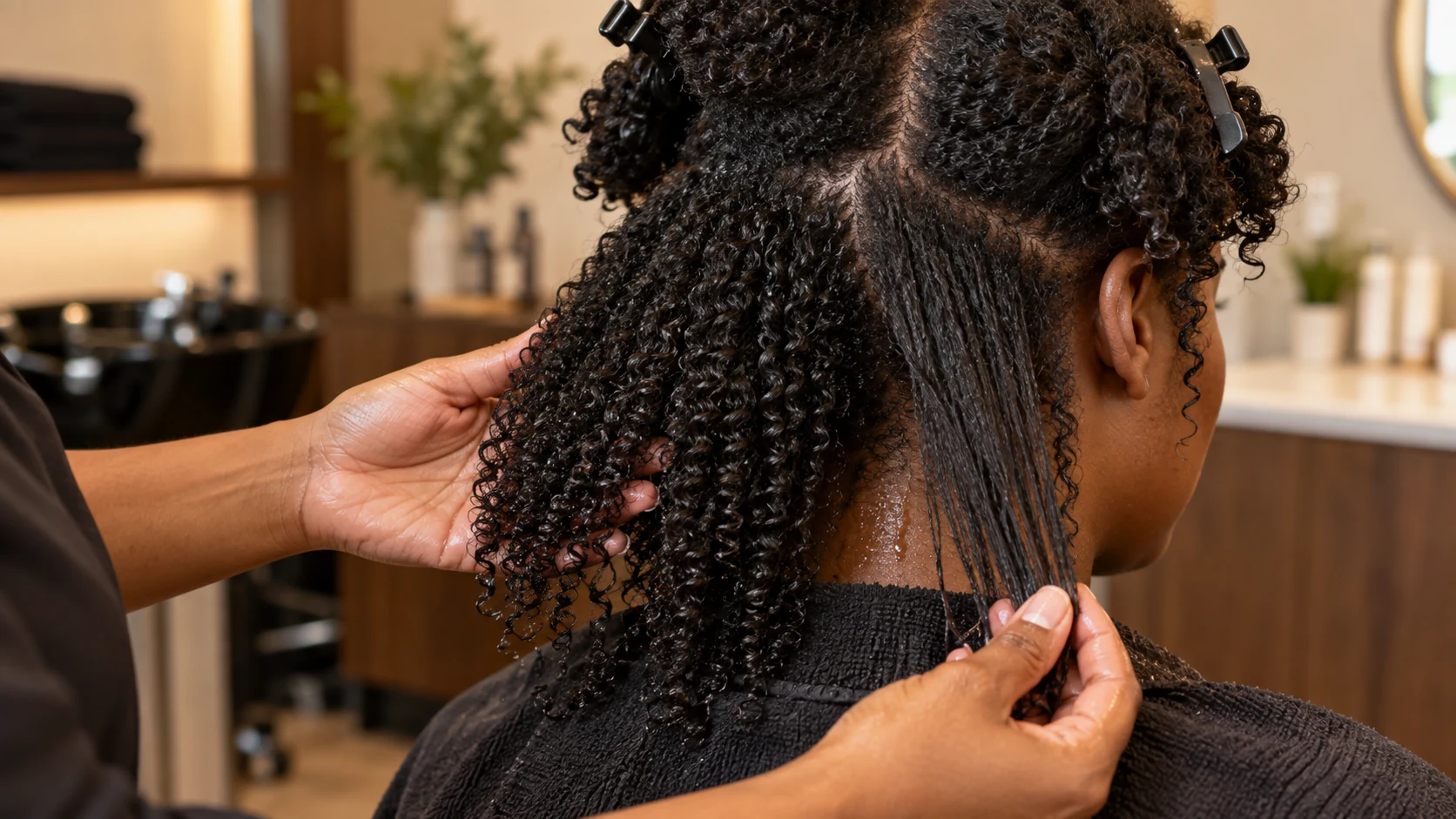
When natural hair no longer curls after washing, heat damage is one possibility, but it is not the only explanation. A heavy product film, a stretched style, incomplete cleansing, or chemical processing can also leave sections looking looser. The useful question is whether the pattern returns after the hair is thoroughly cleansed, conditioned, and left without direct heat for several wash days.
If the same sections remain straight, limp, rough, or unusually fragile while nearby hair recoils normally, the fiber may have been altered by heat. Hair outside the scalp cannot rebuild itself biologically, so the plan shifts from trying to force the old curl back to preventing more damage, improving manageability, and deciding how the affected length will be trimmed.
What Heat-Damaged Curls May Look Like
Heat damage is often uneven. The front, crown, or ends may remain stretched while protected sections still curl. You may see pieces that dry almost straight, coils that have become much looser, rough ends, increased tangling, or strands that snap with little tension. The change may be most obvious after a silk press, frequent flat ironing, or repeated blow-drying at high heat.
One altered wash day does not prove permanent damage. Styling products, silicones, oils, and buildup can weigh down a pattern. Hair that was kept in braids or another stretched style may also take time and a full wash to recoil. Compare the same clean section across more than one wash before making a drastic cutting decision.
What Excessive Heat Does to the Hair Fiber
The visible hair strand has an outer cuticle and an inner cortex that provides much of its strength and shape. Repeated or excessive heat can crack and lift the cuticle, change moisture behavior, weaken mechanical properties, and alter protein structures inside the fiber. Damage tends to increase as temperature, contact time, and repetition increase.
Using very hot tools on wet or damp hair can be especially damaging because rapidly heated water inside the fiber can create severe structural changes. A sizzling sound is not a normal sign that styling is working. Stop, let the hair dry fully, and reduce the temperature rather than making another pass.
Rule Out Buildup and Temporary Stretch First
Begin with a thorough but appropriate shampoo. If the hair has a heavy film or has been layered with oils, butters, and long-hold stylers, clarify when needed and follow with conditioner. Detangle gently, rinse completely, and allow the hair to dry without stretching the section straight.
Do not test curl return by repeatedly wetting one small piece and pulling it. Evaluate the whole section after the same basic routine for two or three wash days. If the pattern returns, the issue may have been product or temporary stretch. If it remains altered and the strand feels weaker, plan around probable damage.
Can Heat-Damaged Curls Come Back?
A temporarily stretched or coated curl can return when the cause is removed. A strand whose structure has been permanently altered by heat cannot grow a new undamaged section along the existing length. New growth from the follicle can retain its natural pattern, but the damaged portion remains the same fiber until it is cut away.
Conditioners, leave-ins, protein-containing products, and bond-focused products may improve feel, reduce friction, or make styling easier. They do not turn permanently straightened length back into untouched natural hair. Be careful with marketing that describes cosmetic improvement as complete repair.
A Practical Recovery Routine
Pause direct high heat while you assess the hair. Cleanse the scalp, condition the lengths, and detangle in sections with enough slip. Use a leave-in or styler that improves handling without creating a heavy film. Dry with air movement and the lowest practical temperature rather than holding concentrated heat close to one area.
Choose styles that work with the mixed pattern instead of repeatedly straightening the roots and damaged pieces to match. Twists, braid-outs, roller sets, and low-tension updos can create a more consistent finish while reducing daily manipulation. If the hair is breaking, simplify the routine before adding several treatments at once.
Trim Gradually or Remove the Damage at Once
You can remove all affected length in one cut or trim it gradually as new hair grows. A larger cut makes the texture more consistent immediately. Gradual trimming preserves more length but requires managing the difference between healthy new growth and altered ends.
Choose a schedule based on the severity of damage, current length, and how much time you can spend detangling and styling. Thin, transparent, splitting, or repeatedly knotting ends are not protecting your length simply because they are still attached.
How to Reduce Future Heat Damage
Start with fully dry hair before using a flat iron or curling tool. Apply a product specifically labeled for heat protection and use the lowest temperature that achieves the intended result. Work in clean sections and limit passes rather than repeatedly running a tool over hair that is already straight.
Space heat-styled looks so the fiber is not exposed continuously. Consider the full history of the strand: bleached, colored, relaxed, weathered, or very fine hair may tolerate less stress than untreated, stronger hair. A temperature that worked for someone else is not automatically appropriate for your hair.
Do Not Confuse Scalp Growth With Damaged Length
Heat damage affects the existing hair fiber. New growth comes from the follicle and may emerge with the usual natural pattern even while the older length remains straight. Scalp oils or growth products cannot reverse a damaged curl several inches away from the root.
If you are seeing short pieces and thinning ends, focus on strand protection and trimming. If full-length hairs are shedding, the part is widening, or density is changing at the scalp, the concern is different. Review our updated guide to scalp health and hair growth before assuming heat explains every change.
When to See a Stylist or Dermatologist
A natural-hair professional can compare textures, identify damaged ends, plan a shape, and create a gradual trim and styling routine. Bring photos of the hair before and after the heat event and explain which tools, temperatures, and products were used.
See a dermatologist when you also have bald patches, a widening part, scalp pain, inflammation, sores, or sustained increased shedding. Heat styling can break fibers, but it does not explain every form of hair loss.
For cutting, reshaping, maintenance, and lower-heat styling, explore GlamorChiQ's Natural and Textured Hair services in Memphis. If density or scalp changes are part of the concern, begin with Hair and Scalp Analysis.
Work with the texture you have today
Build a cut, conditioning, and styling plan that protects new growth while damaged length is managed or removed.
Explore Natural Hair ServicesFrequently Asked Questions
Cleanse thoroughly, condition, and let the section dry without stretching or direct heat across several wash days. A section that remains unusually straight, rough, or fragile while nearby hair recoils may be heat damaged.
A coated or temporarily stretched curl may return. A permanently altered fiber cannot biologically restore its original structure, although products may improve feel and manageability while the damaged length grows out or is trimmed.
Not necessarily. You can remove it at once or trim gradually. The choice depends on breakage, tangling, current length, styling time, and how much texture difference you want to manage.
No. Heat protectant can reduce damage, but temperature, contact time, repeated passes, moisture, and the prior condition of the hair still matter.