
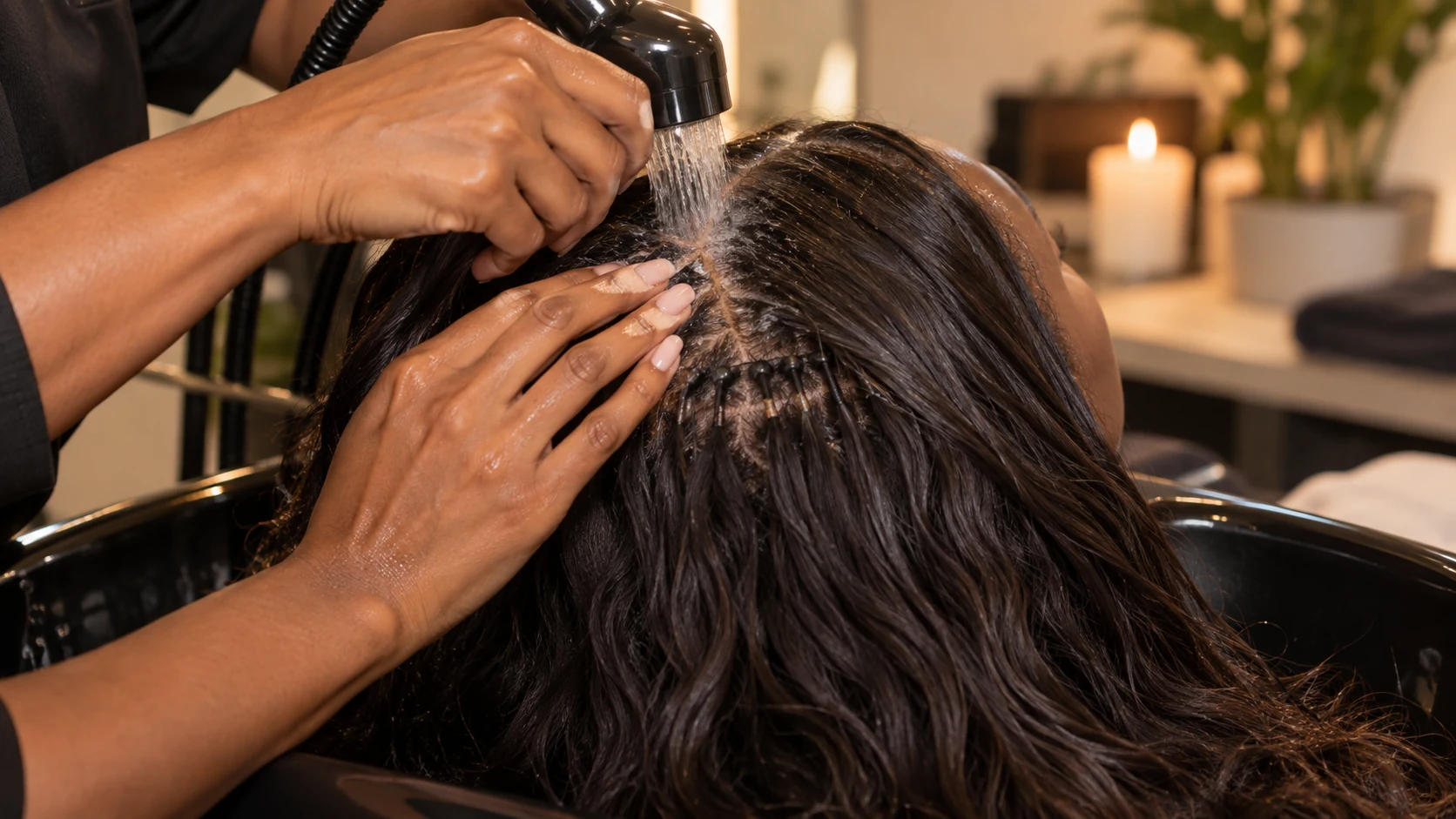
A Head Spa can still be possible when you wear hair extensions, but the service should be planned around the attachment method, your maintenance schedule, and the condition of your scalp. The wrong wash position, heavy product, rough massage, or incomplete drying can create tangling and strain close to the attachment points.
The first question is not simply whether a Head Spa accepts clients with extensions. Ask whether the provider works with your specific method and what parts of the experience will be adapted. K-tips, bead or weft installations, tape-ins, sew-ins, and temporary extensions do not all respond to water, pressure, products, or heat in the same way.
Your Extension Method Changes the Appointment
Individual bonds or beads create many small attachment points that must remain organized during washing. A weft creates a longer horizontal attachment area where product and moisture can collect if the scalp is not rinsed and dried carefully. Tape-ins have adhesive tabs that may require restrictions on oils, conditioners, and heat near the installation. Clip-ins are usually removed before a scalp service.
Tell the Head Spa provider exactly which method you wear, when it was installed, and when maintenance is due. If you do not know the method, send a clear photo of the attachment area before booking. The provider should not have to guess after your hair is already wet.
Choose the Right Time in Your Maintenance Cycle
An appointment immediately after installation may be uncomfortable if the scalp is still sensitive or the attachment points need time to settle. An appointment too close to removal or move-up time may also be a poor fit if there is substantial regrowth, matting, or shedding caught near the attachments.
Your extension professional can tell you when washing is appropriate for the system you wear. In many cases, the most useful timing is when the installation is secure, the scalp is comfortable, and there is enough access to cleanse and dry between the rows. If the service and extension maintenance are performed by different professionals, make sure both know the planned schedule.
Cleansing Should Reach the Scalp Without Disturbing the Install
A scalp-focused wash should use controlled sectioning rather than piling the lengths on top of the head. The hands should move gently between the attachment rows, with pressure directed at the scalp instead of rubbing bonds or tangling the extension hair. Rinsing matters as much as cleansing because leftover product can sit around attachments and feel like new buildup.
More product is not automatically better. Heavy oils, thick masks, scrubs, or aggressive exfoliation may not suit every installation. Ask what will be placed near the attachment points and whether it is compatible with the method. If your extension professional gave you an aftercare plan, share it before the Head Spa appointment.
Massage Must Stay Gentle Around Attachment Points
A relaxing massage should not move the installed hair back and forth at the root. Strong circular rubbing can encourage tangling and place unnecessary stress on the natural hair supporting the extensions. The technique may need to be shorter, lighter, or limited to areas with safe access.
Speak up if you feel pulling, stinging, or tenderness. Pain is not evidence that a scalp service is working. Repeated tension from extensions or other tight styles can contribute to traction alopecia, especially when warning signs are ignored. If the installation already feels painful before the appointment, contact the person who installed it rather than trying to calm the area with massage.
Drying Is Part of the Service, Not an Afterthought
The scalp may feel dry while moisture remains beneath a weft, inside a braid foundation, or around dense attachment rows. Before booking, ask how the provider checks and dries those areas. Leaving with damp attachment points can be uncomfortable and may make the hair harder to manage.
Drying should also respect the temperature limits of the extension method. Excessive heat can affect some bonds, adhesives, natural hair, and extension fiber. The provider should be able to explain how drying is adapted without promising one universal technique for every installation.
When to Postpone the Head Spa
Postpone the service if attachments are slipping, bonds are tangled together, the foundation is loose, or there is significant matting near the scalp. Those concerns may need extension maintenance or removal first. A Head Spa should not be used to work around a failing installation.
New bald areas, drainage, open skin, marked swelling, severe tenderness, or a persistent rash need appropriate evaluation. A Head Spa is a comfort and scalp-care service, not a way to diagnose or treat a medical condition. When hair loss or inflammation is part of the concern, a dermatologist may need to be involved.
What to Confirm Before You Book
Share the extension method, installation date, maintenance date, current products, and any discomfort or tangling. Confirm whether the appointment includes washing the extension lengths, how the attachment rows will be dried, and whether finishing or styling is separate. Ask whether the provider wants photos in advance.
If you are considering extensions rather than already wearing them, start with the Hair Extensions service page so the method can be planned around your natural hair and goals. If you already wear extensions and want a scalp-focused experience, review the Head Spa service details and request priority access with your extension method included.
Plan scalp care around your installation
Tell us which extension method you wear and what you want from the appointment. We will help clarify whether the Head Spa experience can be adapted safely for your current installation.
Explore Head Spa Priority AccessFrequently Asked Questions
Potentially. The provider should confirm that the service can be adapted to your extension method, attachment points, maintenance schedule, and drying needs.
A well-planned service should avoid unnecessary pulling and incompatible products, but every method has different care requirements. Confirm the plan with both the Head Spa provider and your extension professional.
Not every oil or product is compatible with every attachment method. Ask what will be applied near the installation and follow the aftercare guidance for your specific extensions.
The best timing depends on the method and condition of the installation. Ask your extension professional when the attachments will be secure, accessible, and ready for cleansing.