
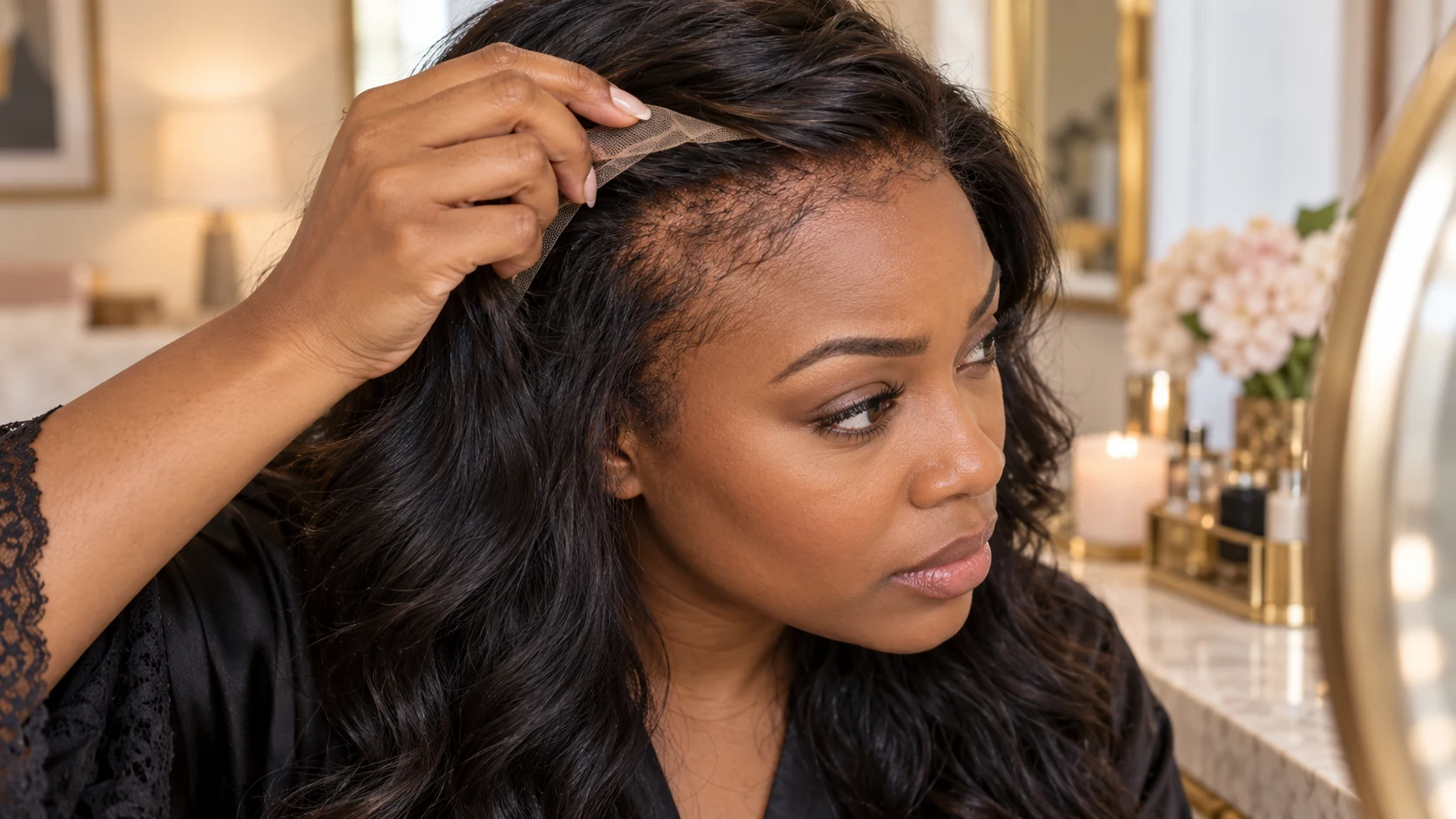
Wigs can provide style flexibility, privacy, and meaningful coverage during hair loss. The wig itself is not automatically harmful. Problems usually come from the way the unit is anchored, how the natural hair is prepared underneath, where adhesive is placed, and how the wig is removed.
If your temples look thinner, the hairline feels sore, or short broken hairs appear after repeated installs, do not assume the solution is simply a different glue. First identify which part of the wearing process is stressing the hair or scalp.
Four Ways a Wig Routine Can Affect the Hairline
The first is tension from the foundation. Tight cornrows, small perimeter braids, thread, elastic bands, or a wig that is undersized can keep the same hairs under constant pull. The second is repeated pressure from clips, combs, or a grip band placed in one location.
The third is adhesive contact and removal. Glue placed over fine edge hairs can capture them, and hurried removal can pull hair from the root or break it along the shaft. The fourth is irritation or trapped residue. Sweat, adhesive, remover, oil, and product can remain at the margin and make an already sensitive area harder to tolerate.
Tension and Traction Alopecia
Traction alopecia is hair loss caused by repeated pulling. It often begins at the temples or frontal hairline, but the location follows the source of tension. Early clues can include tenderness, bumps, short broken hairs, or thinning where the base style, band, clips, or unit repeatedly pulls.
The American Academy of Dermatology advises changing a pulling style when there is pain, stinging, crusting, scalp tenting, broken hair around the forehead, or recession. Its guidance on hairstyles and traction alopecia also explains that continued pulling can eventually cause permanent loss.
A wig can be used as a low-manipulation option, but only when the hair underneath is not braided too tightly and the unit is not transferring pressure back to the same vulnerable margin.
What Wig Glue Can Do
Adhesive is designed to hold a unit to skin, not to strengthen natural hair. When it overlaps the hairline, fragile hairs may become embedded. Reapplying adhesive without fully removing old residue can widen the contact area and make later removal more difficult.
Skin reactions are another concern. Itching, burning, swelling, blisters, or persistent redness can reflect irritation or contact allergy. Continuing to cover a reacting area can intensify the problem and make it harder to see where the reaction ends and hair loss begins.
Patch testing cannot guarantee that a person will never react, and a previously tolerated product can still cause trouble. If the skin is inflamed, stop the adhesive process and seek appropriate medical guidance rather than changing products repeatedly on the irritated area.
Removal Is Part of the Install
Many avoidable problems happen during takedown. A unit should not be pulled forward or lifted against resistance. The correct remover needs time to soften the specific adhesive, and the lace should release without dragging captured hairs.
Work in small sections, add more remover when needed, and separate the lace from skin rather than using the natural hair as leverage. After the unit is off, adhesive residue should be dissolved gently. Scraping with a comb, fingernail, or abrasive cloth can injure both the hairline and skin.
If you cannot see the perimeter well or the adhesive is not releasing, professional removal is safer than forcing it. Repeated rushed takedowns can matter more than a single carefully performed install.
The Foundation Under the Wig
The natural hair should be clean, conditioned, dry, and arranged without painful tension. A flatter braid is not automatically a safer braid. Very small perimeter sections may look seamless while placing too much load on fine hairs.
The ends should be secured without bulky knots or pins pressing into the scalp. If a cap, band, comb, or clip leaves a persistent indentation, headache, or tender spot, the anchoring plan needs adjustment. Pressure in the same area day after day is not protective simply because the hair is covered.
Fit, Friction, and Daily Wear
A unit that is too small may pull backward at the temples. A loose unit may shift and rub. Wig grips can improve stability for some wearers, but an overly tight band or one positioned directly on fragile edges can create another source of pressure.
Consider where friction occurs during exercise, sleep, headwear, and long workdays. A clean, properly fitted unit with adjustable support should remain secure without causing pain. If the fit requires several clips and a tight band to feel stable, the cap construction or size may be wrong for the wearer.
Warning Signs to Take Seriously
Stop and reassess if you notice pain, stinging, a pulling headache, bumps, crusting, open skin, adhesive burns, or a receding margin. Short hairs can be new growth, breakage, or miniaturized hairs; their presence is not automatically reassuring.
A shiny hairline, loss of visible follicular openings, or thinning that continues after tension is removed needs prompt dermatology evaluation. Other hair-loss conditions can affect the same area, so the wig routine may be one contributor rather than the entire explanation.
A Lower-Risk Wig Routine
Rotate anchoring points instead of using the same clips or adhesive boundary every time. Keep glue on skin and away from natural hairs. Allow enough removal time. Give an irritated hairline a break, and avoid covering active sores or inflammation with a new install.
Clean the scalp and natural hair on a schedule that fits sweat, oil, product use, and the type of unit. Make sure the hair underneath is fully dry before prolonged coverage. Photographs taken under the same lighting between installs can reveal gradual changes that are easy to miss day to day.
The AAD also recommends professional installation, attention to pain, and regular breaks from pulling styles in its guidance on reducing damage from weaves and extensions. The same principle applies to any wig foundation that places repeated stress on natural hair.
When You Need Coverage and the Hairline Is Fragile
Needing coverage does not mean you must expose the hairline to more adhesive or tension. Glueless construction, a properly fitted custom unit, different cap features, or a nonattached option may provide coverage while respecting fragile areas.
The right choice depends on the location and stability of the hair loss, scalp sensitivity, daily routine, styling goals, and how independently you can apply and remove the unit. A beautiful result should not require hiding new damage beneath it.
What an Evaluation Should Clarify
An evaluation should distinguish breakage from shedding, map thinning against the foundation and attachment points, review symptoms, and decide whether the scalp needs medical assessment before another install. In-person magnified images may help document the perimeter and compare stronger and weaker areas.
A dermatologist is the correct professional for diagnosis, prescription treatment, allergy assessment, or suspected scarring. A trichology-focused Hair & Scalp Analysis can document the visible pattern, review the wig routine, identify mechanical stress, and help organize the safest next step within scope.
Do not cover a changing hairline without understanding it
Choose a virtual or in-person Hair & Scalp Analysis to review the pattern, your wig routine, and the next appropriate step.
Choose Your AnalysisFrequently Asked Questions
A wig does not automatically cause hair loss. Risk rises when the foundation is tight, clips or bands press repeatedly on the same hairs, adhesive is placed on hair, removal pulls strands, or the scalp remains irritated without a break.
Adhesive-related pulling and repeated irritation can damage the hairline, but the outcome depends on severity and duration. Early breakage or traction may improve after the stress stops. Longstanding traction that scars follicles can be permanent and needs medical assessment.
Use a low-tension foundation, keep adhesive off the hair, avoid repeated placement on the same fragile margin, remove the unit with the correct remover and enough time, and monitor the hairline between installs.
No. Pain, stinging, headache, scalp tenting, or persistent tenderness are warning signs that the fit, band, clips, braid pattern, or adhesive needs to be changed.
Seek medical evaluation for a receding or shiny hairline, smooth bald areas, persistent redness, burning, bumps, crusting, sores, drainage, or loss that continues after the wig-related stress is removed.