
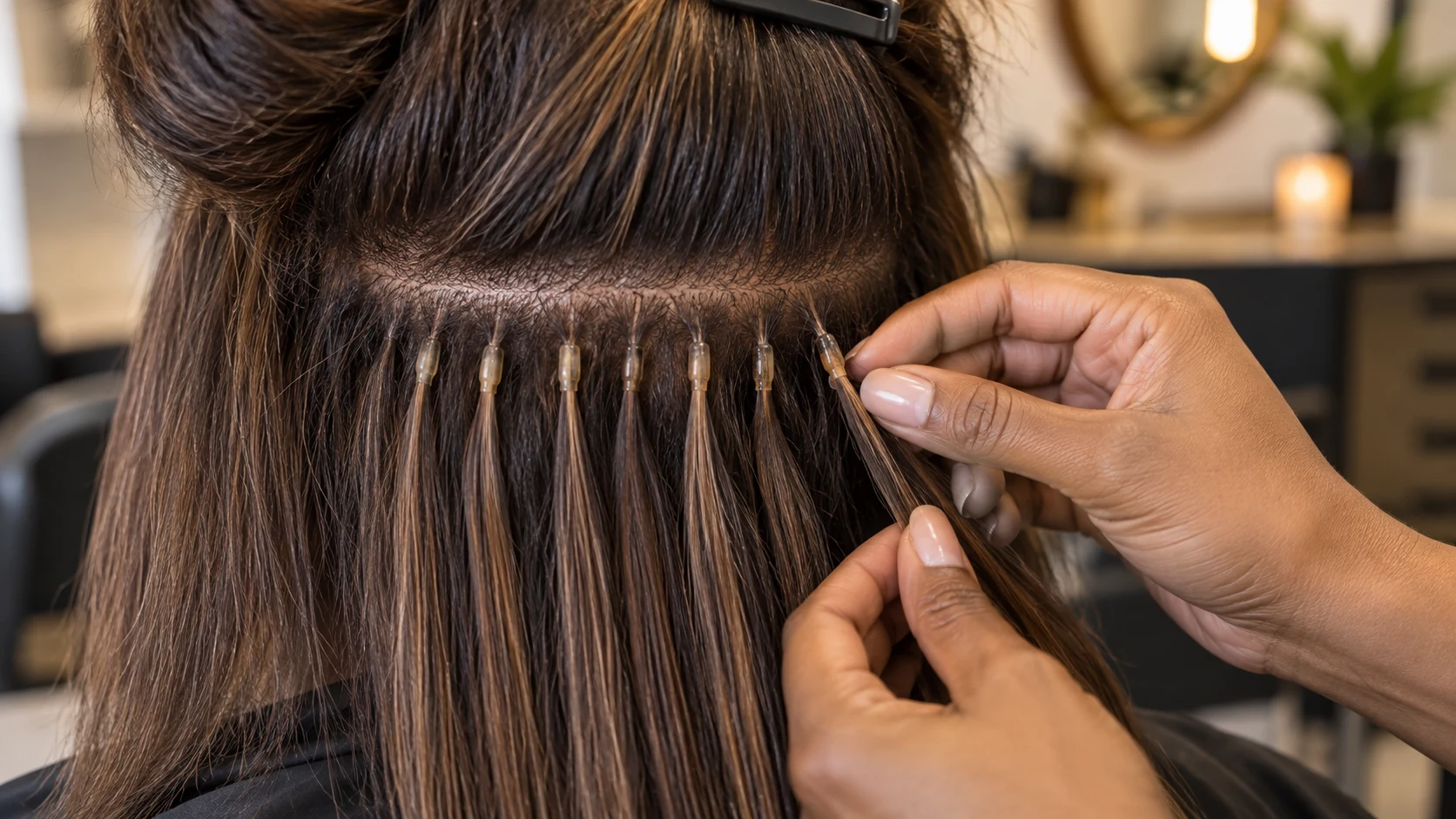
K-tip extensions can be customized in small individual bonds, which is one reason people with fine hair are interested in them. That flexibility does not make the method automatically safe for every fine-haired client. A suitable installation depends on how much natural hair is available to support each bond, whether density is stable, where the hair is strongest, and how much added length and weight the client wants.
The first decision is not simply whether a strand feels fine. It is whether the scalp and natural hair can support an extension plan without relying on fragile areas. A careful consultation should assess density, breakage, chemical history, shedding, lifestyle, and the client's ability to maintain and remove the extensions correctly.
What K-Tip Extensions Are
K-tips are individual extension strands with a keratin-based bond at the top. During installation, the bond is softened with a professional tool and shaped around a small section of natural hair. Once cooled, each attachment moves independently rather than sitting in a continuous row.
The small-bond format can allow detailed placement and blending. It also means the installer makes many individual decisions about section size, bond size, spacing, weight, and location. Good results depend less on the method name than on those decisions and on what the natural hair can safely carry.
Fine Hair and Thinning Hair Are Not the Same
Fine hair describes the diameter of an individual strand. Thin or low-density hair describes how much hair is present in an area. A person can have fine strands with high density, coarse strands with low density, or any combination between them.
That distinction matters because an extension is supported by a group of natural strands. Fine but stable, reasonably dense hair may allow a carefully scaled installation. Progressive thinning, active shedding, bald patches, inflamed scalp, or significant breakage can make added attachments inappropriate until the cause is understood.
Who May Be a Better Candidate
A stronger candidate generally has stable density, a comfortable scalp, enough natural hair to conceal and support the bonds, and realistic goals for length and fullness. The hair should not be breaking readily at the proposed attachment points. The client must also be willing to brush, wash, dry, sleep, schedule maintenance, and return for professional removal as directed.
A weaker candidate may have unexplained thinning, recent heavy shedding, traction alopecia, fragile overprocessed hair, active scalp irritation, or insufficient density around the desired placement. In those situations, delaying extensions or choosing a nonattached alternative can protect the hair while the concern is evaluated.
Why Bond Size and Added Weight Matter
Fine hair usually needs smaller sections and lighter extension strands than stronger, denser hair. A tiny bond is not useful if the attached extension is still too heavy for the natural section. The amount of extension hair, the number of bonds, the planned length, and how the finished hair will be styled must work together.
More hair is not always a better installation. Excessive fullness can increase weight and make concealment harder. A conservative plan that improves movement and density without overloading the natural hair may look more believable and be easier to maintain.
Placement Is as Important as the Bond
K-tips need enough distance from the scalp to move comfortably without excessive leverage, but they also need to remain secure and concealed. Bonds should not be placed on irritated skin or where the natural section is too small. The hairline, temples, and very fine perimeter often require extra caution or complete exclusion.
Placement should reflect how the client wears ponytails, parts the hair, sleeps, exercises, and uses heat. Repeatedly pulling the completed style tightly can stress the natural hair even when the original installation was careful.
What a K-Tip Consultation Should Review
Bring an honest history of color, bleach, relaxers, smoothing services, previous extensions, breakage, and shedding. Explain the desired length, fullness, texture, and daily styling routine. Photos of recent density and examples of the intended finish are more useful than asking for the maximum number of bonds.
The professional should examine the scalp, strand strength, density, perimeter, and potential attachment zones. A strand or bond test may help assess concealment and handling, but it cannot predict every response over months of wear. The final plan should include what would cause the installation to be postponed.
Daily Care for Fine Hair With K-Tips
Brush with a tool and technique recommended for bonded extensions while supporting the roots with the other hand. Separate bonds as instructed so shed hairs do not mat between attachments. Avoid aggressive pulling, backcombing at the bonds, and tight styles that concentrate force around the perimeter.
Cleanse the scalp thoroughly without scratching or tangling the attachment area. Apply conditioner and oily products according to professional guidance, usually keeping heavy residue away from the bonds. Dry the roots and bonds completely rather than leaving the attachment area damp for long periods.
At night, detangle gently and secure the hair in a loose, low-tension arrangement. Maintenance is not optional. If bonds begin matting, twisting together, slipping excessively, or causing discomfort, contact the installer rather than trying to reseal or remove them at home.
Removal Is Part of the Safety Plan
K-tips are not designed to remain indefinitely. As natural hair grows and sheds, the attachment moves farther from the scalp and the shed strands remain held inside the bond until removal. Waiting too long can increase tangling, leverage, and stress.
Professional removal uses a method suited to the bond and carefully separates the released extension from the natural hair. Pulling, peeling, cutting, or using an improvised solvent can damage fine strands. Budget and schedule for removal before deciding to install.
Warning Signs to Act On
Persistent pain, stinging, bumps, crusting, redness, headaches from tension, visible pulling, or new thinning are not normal adjustment symptoms. Neither are severe matting, several natural strands breaking at bonds, or a widening area around repeated placement.
Contact the extension professional promptly and remove or adjust the source of tension. If hair loss continues, the scalp is inflamed, or the pattern is not clearly related to the bonds, seek evaluation from a dermatologist. Review our guide to reducing extension-related damage for broader planning guidance.
Choosing the Right Next Step
K-tips may be one option for selected fine-haired clients, but a lighter plan, another method, a topper, or no attached extensions may be more appropriate depending on density and goals. A responsible recommendation sometimes means using fewer bonds, reducing length, avoiding the perimeter, or postponing installation.
GlamorChiQ extension planning begins before installation so method, weight, color, texture, maintenance, and expectations can be reviewed together. Visit the Hair Extensions service page to learn about the available planning process and request the appropriate next step.
Plan the extension around the natural hair
Choose method, bond size, weight, placement, and maintenance according to your actual density and strand condition.
Explore Hair ExtensionsFrequently Asked Questions
They may be suitable for selected clients when density is stable and bond size, extension weight, placement, and maintenance are carefully customized. Fine hair alone does not determine suitability.
Active or unexplained thinning should be evaluated before adding attached extensions. Extra weight and tension may worsen some hair-loss patterns, even when the bonds are small.
Damage is not inevitable, but it can occur through excessive weight, poor sectioning, tight styling, inadequate maintenance, delayed removal, or improper removal.
They should be professionally removed with the appropriate bond-release method and careful separation. Pulling, cutting, or improvising at home can break fine strands.