
Scalp buildup is a useful description, but it is not a diagnosis. The material you see or feel may include sebum, sweat, styling product, dry-shampoo particles, adhesive residue, environmental debris, or skin scale from an underlying condition. More than one source can be present at the same time.
The safest solution depends on what is accumulating and why. Aggressive scraping may remove visible material for a day while worsening irritation, breakage, or inflammation underneath.
What Creates Scalp Buildup?
Sebum naturally moves from oil glands onto the scalp and hair. Sweat adds water, salts, and other components. Leave-ins, gels, edge controls, oils, butters, sprays, fibers, and dry shampoo can collect between washes, especially when several layers are reapplied.
Flaking skin can join that mixture. Dandruff, seborrheic dermatitis, psoriasis, eczema, irritation, and some infections can all change the scalp surface. Calling every flake product buildup can delay the care an inflamed scalp needs.
Signs That Point Toward Accumulation
Buildup may feel waxy, tacky, gritty, or coated. You may see residue along a part, around extension attachments, inside locs, or on the teeth of a comb. Hair can look dull, stay heavy after washing, or resist water and lather near the roots.
Odor that returns quickly, residue beneath the fingernails after scratching, or flakes that cling to product-coated strands can also occur. None of these signs identifies the cause on its own. The color and texture of residue can be altered by oils, gels, lint, hair color, and recent washing.
Buildup Versus Dandruff and Seborrheic Dermatitis
Dandruff and seborrheic dermatitis commonly involve recurring scale in oil-rich areas and may include itch or redness. Product residue can sit on top of that scale, making it appear thicker and harder to rinse.
If flakes return soon after a thorough wash, the scalp remains itchy or red, or the eyebrows, ears, or sides of the nose are also affected, a recurring skin condition may be more relevant than cleansing technique alone. Medicated products should be selected and used according to their label or medical advice, not combined at random.
How to Clean the Scalp Without Scraping It
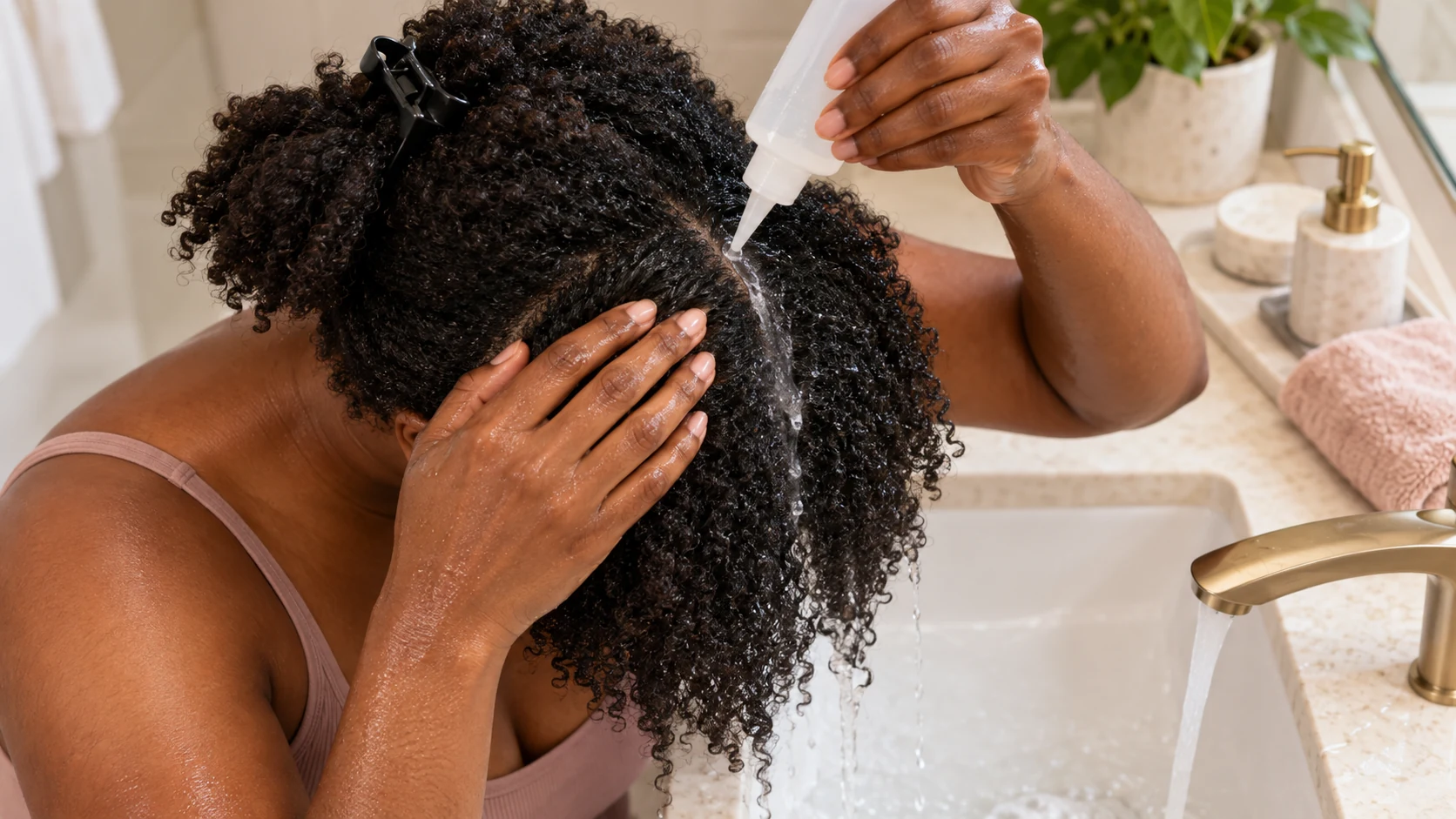
Start by saturating the hair and scalp thoroughly. Work in sections so cleanser reaches the skin instead of sitting only on top of dense hair. Apply shampoo to the scalp, massage with finger pads rather than nails, and allow the lather and rinse water to move through the lengths.
A second gentle cleanse may be more effective than one aggressive scrub when the first wash is breaking through oil and styling layers. Rinse longer than you think you need, especially behind the ears, at the crown, and along the nape.
Avoid using comb teeth, sharp applicator tips, fingernails, or abrasive scalp tools to lift stuck material. Scratches can burn when products are reapplied and may introduce another source of inflammation.
Where Clarifying Shampoo Fits
A clarifying shampoo can help remove stubborn product and mineral residue, but stronger cleansing is not automatically better. The right interval depends on how often you use coating products, sweat, swim, wash, or wear extensions, along with the condition of your hair and scalp.
Overuse can leave the hair rough or dry and can irritate sensitive skin. Follow the product directions, concentrate cleansing at the scalp when appropriate, and restore slip to the lengths with suitable conditioning. A medicated dandruff shampoo and a cosmetic clarifier are not interchangeable simply because both may reduce visible residue.
Buildup in Natural and Textured Hair
Longer wash intervals and dense curls can allow normally shed skin, sebum, and styling product to remain in place longer. At the same time, textured lengths may need careful conditioning and low-friction handling. The answer is not to choose between a clean scalp and protected hair.
Sectioned washing, targeted applicator bottles, sufficient water, and deliberate rinsing can improve scalp access without piling the hair into tangles. Apply heavy stylers where they are needed rather than automatically coating the scalp.
Locs, Braids, and Extensions
With locs, incomplete rinsing can leave cleanser or product inside the loc, while heavy waxes and repeated oils may attract lint. Cleansing needs enough water flow and drying time. Visible particles embedded within mature locs may not be removable by one wash and should not be picked out aggressively.
Braids and extensions create attachment areas that need careful access. Product can collect above or below a row, around beads, beneath thread, or along a braided base. The attachment should not remain wet, and cleansing should not require pulling or twisting the natural hair.
Wigs, Adhesive, and the Perimeter
Wig adhesive and remover can collect along the frontal margin. Reapplying over old residue increases the amount that later has to be dissolved and can capture fine hairs. Remove adhesive with the method intended for that product and keep it off natural hair whenever possible.
If the hairline is thinning, painful, or inflamed, treating the area as a simple cleaning problem is not enough. Review the entire wig routine, including braid tension, fit, bands, clips, adhesive placement, removal, and time between installs. Read the guide to hair loss from wigs and wig glue for that process.
Why Popular Home Remedies Can Backfire
Undiluted essential oils, strong acids, baking soda, and repeated physical scrubs can disrupt the scalp barrier or irritate already inflamed skin. A tingling or burning sensation is not proof that a remedy is clearing follicles.
Oil may loosen adhesive or soften scale in some situations, but more oil can also trap debris or worsen an oily feeling. Match the method to the material. Water-soluble product needs water and cleanser; medical scale may need diagnosis and an evidence-based treatment plan.
Can a Head Spa Help?
A professional scalp cleanse can improve access, soften removable residue, and provide a controlled wash and rinse for someone whose scalp is otherwise healthy. It can also reveal whether the material was mostly cosmetic product or whether redness, scale, or symptoms remain after cleansing.
A Head Spa should not be used to scrub through sores, infection, severe inflammation, or unexplained hair loss. Those findings change the next step. GlamorChiQ's Head Spa availability and request process are listed on the Head Spa Memphis page.
When Cleansing Is Not Enough
Seek medical evaluation when the scalp has persistent pain, burning, marked redness, pus, sores, heavy crust, spreading scale, fever, patchy loss, or a shiny area where follicles are no longer visible. A dermatologist can determine whether testing or prescription treatment is needed.
A Hair & Scalp Analysis can document the pattern, review products and wash technique, examine styling or attachment factors, and identify when referral should come first. The goal is to stop guessing whether every visible particle is dirt, dryness, dandruff, or disease.
Build a Routine That Prevents Reaccumulation
Choose a wash interval based on your actual scalp, activity, and product use rather than a universal calendar. Use fewer overlapping products, apply them intentionally, and give rinse water direct access to the scalp. Clean tools, bonnets, caps, and pillowcases so residue is not immediately transferred back.
Track which products touch the scalp and what changes when one is removed. If buildup returns despite a consistent routine, look beyond cleanser strength. The remaining issue may be inflammation, an unsuitable product, incomplete access, or a condition that needs medical care.
Still seeing residue after you cleanse?
Choose a Hair & Scalp Analysis for a closer review, or join the Head Spa priority list when professional scalp cleansing fits your concern.
Choose Your Next StepFrequently Asked Questions
Possible signs include a coated or waxy feeling, residue around parts or follicles, flakes that cling to hair, persistent odor, reduced lather, or hair that remains heavy after washing. These signs are not specific and can overlap with dandruff or a scalp condition.
No. Buildup describes material accumulating on the scalp or hair. Dandruff is associated with seborrheic dermatitis and can involve recurring flakes, oiliness, itch, and inflammation. A person can have both.
Oil may soften some residue, but it can add another layer and may worsen an oily or inflamed scalp for some people. Water-compatible cleansing is usually needed to remove oil, sweat, and styling products.
There is no universal schedule. Frequency depends on product use, scalp oil, sweating, wash interval, hair condition, extensions or locs, and the cleanser itself. Overclarifying can leave hair dry or the scalp irritated.
Arrange assessment when residue returns quickly, washing does not help, or there is pain, burning, marked redness, sores, pustules, heavy crust, odor, patchy loss, or progressive thinning.