
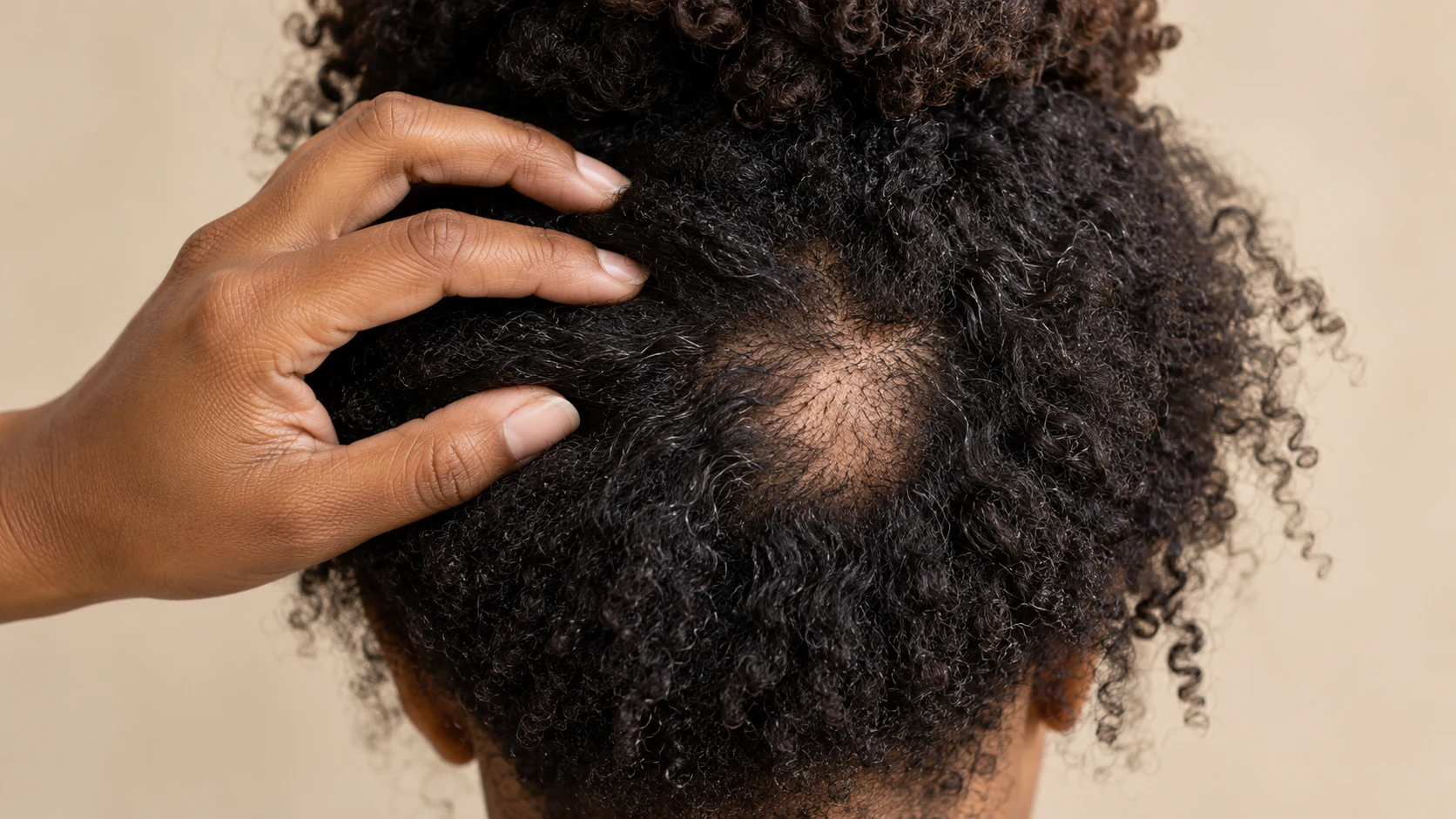
A bald spot describes a visible result, not a diagnosis. Two patches can look similar in a bathroom mirror while coming from very different processes. One may involve temporary interruption of hair growth, another repeated tension or breakage, and another inflammation that can permanently damage follicles.
The most useful first step is to describe the patch precisely: where it is, how quickly it appeared, whether the skin is smooth or scaly, whether short hairs remain, and whether the area itches, burns, hurts, or feels normal.
Start With the Pattern and Location
A smooth, sharply defined round or oval patch can occur with alopecia areata. A thinning area at the temples or hairline may reflect traction, especially when it follows repeated tight styling. A patch with scale and broken hairs raises different questions, including fungal infection.
An irregular area containing hairs of several lengths can reflect breakage or hair pulling. A tender or itchy crown with scale and progressive loss needs special attention because inflammatory and scarring conditions can begin subtly.
Alopecia Areata
Alopecia areata is an autoimmune form of hair loss that often produces one or more smooth patches. It can begin suddenly and may affect the scalp, beard, eyebrows, eyelashes, or other body hair. Some people notice short tapered hairs around an active margin, but home inspection cannot confirm the condition.
A dermatologist can assess the pattern and discuss treatment, monitoring, and related health considerations. Regrowth is possible, but the course varies and no cosmetic product can promise a specific outcome.
Traction Alopecia
Traction alopecia results from repeated pulling force. Tight braids, ponytails, loc maintenance, extension attachments, wigs secured under tension, and repeated styling in the same direction can concentrate stress around the perimeter or attachment areas.
Early signs may include tenderness, bumps, broken hairs, or thinning where the style pulls. Reducing tension early can allow recovery when follicles remain intact. Longstanding traction can become permanent, so reinstalling over a thinning area is not a neutral choice.
Tinea Capitis and Other Infections
Tinea capitis is a fungal scalp infection seen more often in children but possible in adults. It can cause scale, itching, broken hairs, dark dots, tenderness, swollen areas, or enlarged lymph nodes. It requires medical diagnosis and usually prescription treatment; oils and over-the-counter cosmetic scalp products do not treat the infection adequately.
Because it can spread, a suspected fungal patch should be assessed promptly. Do not share combs, brushes, hats, pillowcases, or styling tools while waiting for medical guidance.
Hair Pulling and Localized Breakage
Trichotillomania is a hair-pulling disorder that can create irregular patches with hairs of different lengths. Pulling may be conscious, automatic, or connected to stress and sensory habits. It deserves compassionate medical or mental-health support rather than blame.
Localized breakage can also mimic a bald spot. Chemical overlap, excessive heat, friction, knots, aggressive detangling, or a repeated attachment point may leave short pieces within the area. A close examination helps determine whether hairs released from the follicle or broke along the shaft.
Inflammatory and Scarring Hair Loss
Some conditions inflame and permanently damage follicles. Warning signs can include burning, pain, tenderness, persistent itching, scale around follicles, bumps, crusting, a shiny surface, or loss of visible follicular openings. In Black women, progressive crown loss with symptoms deserves timely medical attention because central centrifugal cicatricial alopecia is one important possibility.
Scarring cannot be confirmed from a photograph alone. A dermatologist may use examination, dermoscopy, laboratory work, or biopsy. Waiting for a large smooth area before seeking care can reduce treatment options.
When It Looks Like a Bald Spot but Is Not One
A natural whorl can expose scalp at the crown, especially under overhead light. A new part, flattened curls, product separation, wet hair, or high-contrast photography can also create the appearance of a patch. Compare the same location under the same lighting and hairstyle before deciding it has changed.
That comparison should not become constant checking. Monthly photographs are usually more useful than daily images because hair growth and density do not change meaningfully overnight.
How to Document the Area
Take a wide photograph showing location and a closer photograph showing the scalp surface. Use the same clean part, lighting, distance, and angle each time. Record the date, symptoms, recent styles, chemical services, illness, medications, and how quickly the patch changed.
Avoid scraping, picking, coloring, or repeatedly pulling on hairs to test whether they are secure. Do not apply several new oils or treatments before the area is assessed; irritation and residue can make the picture harder to interpret.
Who Should Evaluate a Bald Spot?
A dermatologist is the appropriate professional for medical diagnosis, prescription treatment, testing, and biopsy. Start there promptly when the patch is new, expanding, symptomatic, scaly, inflamed, or affecting a child.
A trichology-focused Hair & Scalp Analysis can document the location and pattern, compare shedding with breakage, review tension and hair-care practices, and identify when referral is needed. In-person trichoscopy may add magnified images, but it does not replace medical care.
What the Location Can Add to the Story
The hairline and temples are exposed to repeated styling force, adhesives, wig grips, and extension placement, so traction and breakage belong high on the list there. A single patch behind an attachment or in the repeated path of a clip also raises a mechanical question. The answer is not automatically traction, but the styling map matters.
The crown deserves careful attention when loss progresses outward, the area burns or itches, or scale collects around follicles. A crown whorl can show normal scalp, while inflammatory loss may alter density and the scalp surface over time. Consistent photographs and prompt medical examination help separate those situations.
Patches at the back of the head can reflect friction, pressure, pulling, infection, or an autoimmune pattern. Loss in the eyebrows or elsewhere on the body changes the clinical picture again. Location is therefore a clue, not a verdict. It should be combined with symptoms, onset, hair-shaft condition, scalp appearance, health history, and examination.
The same location can represent different conditions in different people, so context remains essential.
What to Avoid While You Wait
Avoid tight styling over the patch, adhesive or extension placement on fragile hairs, harsh scratching, and unverified products that promise guaranteed regrowth. Do not begin high-dose supplements without medical guidance; more is not automatically safer and some nutrients can be harmful in excess.
Camouflage may be emotionally helpful, but it should not add tension or delay evaluation. Choose low-tension coverage and keep the area accessible for examination.
Can the Hair Grow Back?
The answer depends on the cause and whether follicles remain intact. Alopecia areata and early traction may regrow, fungal infections can recover with appropriate treatment, and broken hair can regain length when the source of damage stops. Scarring conditions can limit regrowth in affected follicles, making early control the priority.
No photograph, camera, oil, or consultation can guarantee regrowth. A good plan identifies the likely process, protects remaining hair, treats medical disease through the correct clinician, and measures change realistically.
A new bald spot deserves a clear next step
Document the pattern and choose an analysis. If the area has pain, scale, inflammation, rapid expansion, or signs of scarring, arrange medical evaluation promptly.
Choose Your AnalysisFrequently Asked Questions
Possible causes include alopecia areata, traction, a fungal infection, hair pulling, breakage, and some inflammatory or scarring hair-loss conditions. The location, scalp surface, hairs within the patch, symptoms, and timeline help separate them.
A smooth round patch is a common presentation of alopecia areata, but appearance alone is not enough for diagnosis. A medical clinician may need to examine the area and consider other causes.
Regrowth depends on the cause, duration, and whether follicles remain capable of producing hair. Some nonscarring conditions can regrow, while permanent follicle damage can limit recovery. Early evaluation protects the most options.
Stress is more often associated with diffuse shedding, although it may coincide with or trigger some conditions. A single defined patch should not be assumed to be stress without evaluation.
Arrange prompt medical care when a patch expands quickly or has pain, burning, pus, crusting, a shiny surface, loss of follicular openings, eyebrow loss, fever, or other symptoms. A scaly patch in a child also needs timely evaluation.